Exam Form Photo and Signature Uploads: The Sizes That Actually Get Accepted
Why portals reject your photo at 11:40 pm, what the three checks really are, and a ninety-second workflow that gets photo and signature through on the first try.
It is 11:40 pm on the last day of the application window, the fee is paid, every field is filled — and the upload box says "Photo must be between 20 KB and 50 KB". Your phone camera produced a 4 MB file. This is where thousands of applications quietly die every season, not from lack of preparation but from a rejected JPEG.
The good news: the rules are mechanical, and once you understand what the form is actually checking, the whole problem takes ninety seconds.
What the upload box is really testing
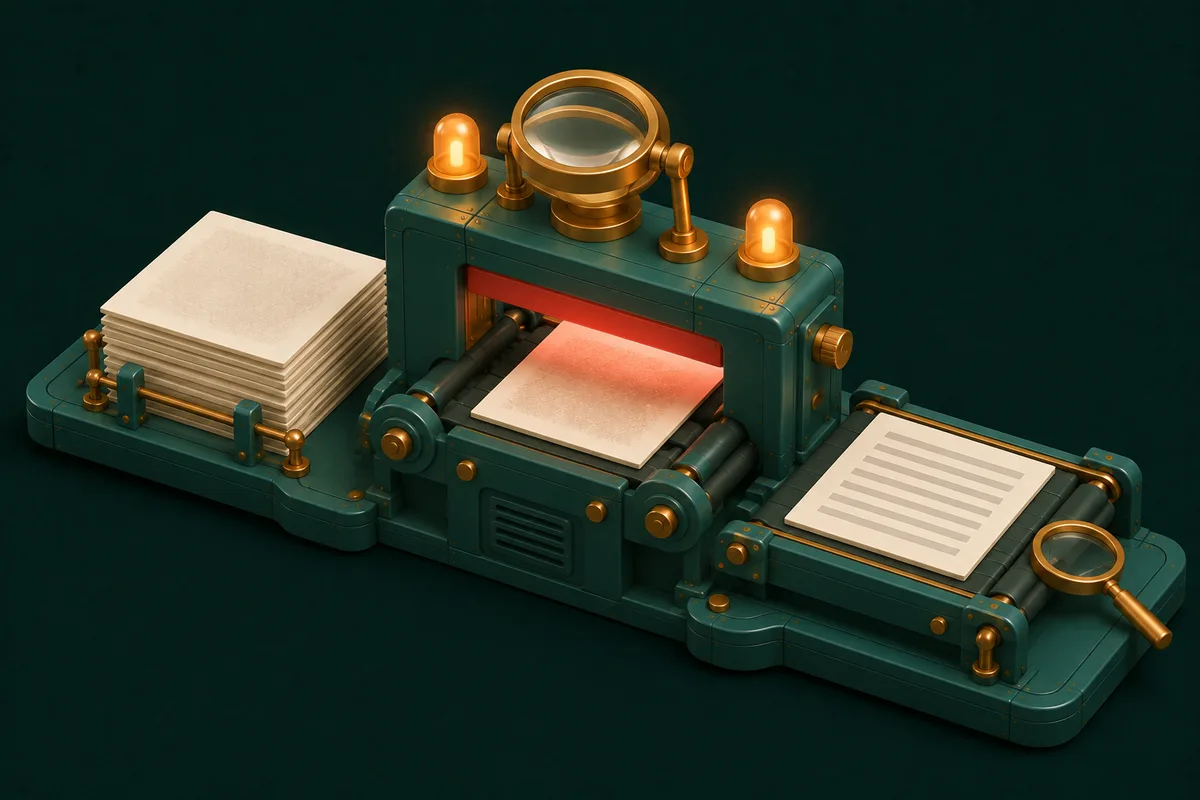
Almost every government and competitive-exam portal in India runs the same three checks server-side, in this order:
- File format — usually JPG/JPEG only. PNG and HEIC are rejected outright, and a phone photo on iOS is HEIC by default.
- Pixel dimensions — a width and height range, commonly around 200x230 for the photograph and 140x60 for the signature.
- File size in KB — a range, not a ceiling. This is the part that catches people: a file can be rejected for being too small as well as too large, because an over-compressed photo is unusable for identity verification.
Some portals add a fourth check on DPI (typically 200 or 300). A few validate the aspect ratio separately, which is why simply squashing an image to the right pixel count can still fail.
Read the official notification, not a blog. Requirements differ per exam and change between cycles. The numbers in any guide — including this one — are typical ranges, not promises. The notification PDF is the only authority.
Once you have the real numbers from the notification, Exam Photo Validator checks your file against them before you upload, which is considerably less stressful than finding out from the portal.
The photograph
Typical requirements across Indian exams look like this:
- Dimensions: roughly 200x230 pixels, sometimes expressed as 3.5 x 4.5 cm
- Size: commonly 20-50 KB, though some accept up to 100 KB or 200 KB
- Format: JPG
- Content: recent, front-facing, plain light background, no cap or dark glasses, ears and both edges of the face visible, name and date sometimes required printed below
Exam Photo Resizer handles the general case. For a specific exam there are locked presets that already carry the right numbers — JEE, GATE, CAT, CLAT, CTET, CUET, IBPS, Army, Air Force and Driving Licence.
If your photo is the right dimensions but the wrong weight, Compress Image to 50KB and its siblings at 100KB and 200KB target the number directly rather than making you guess at a quality slider.
The signature
The signature trips people up more often than the photograph, because the constraints are tighter and the source is worse — usually a phone photo of ink on paper, shot at an angle in poor light.
- Dimensions: commonly around 140x60 pixels
- Size: frequently 10-20 KB, one of the tightest windows you will meet
- Content: signed in black or dark blue ink on plain white paper, running signature, not block capitals
Two ways to get a clean source. Photograph the paper straight on in daylight and crop tight with Crop Image — or skip paper entirely and sign directly on screen with Signature Pad, which gives you a clean transparent-background signature with no shadows or grey cast to fight.
Then Compress Signature 10-20KB hits that awkward window exactly.
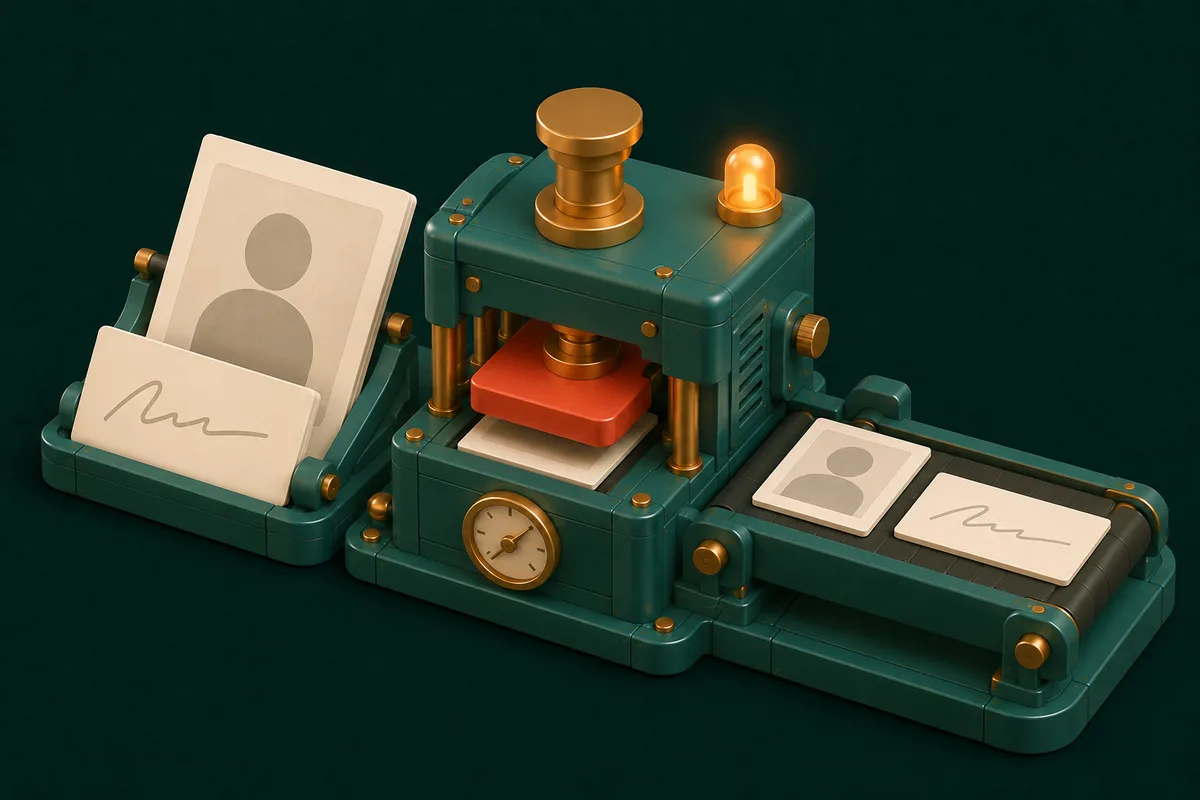
Where a form wants the photo and signature as a single combined image — a common requirement — Merge Photo & Signature composes them in the standard stacked layout.
The ninety-second workflow
- Get the real numbers from the official notification. Write them down.
- Convert first if needed — an iPhone photo is HEIC, so run HEIC to JPG before anything else.
- Crop to the correct aspect ratio with Crop Image. Do this before resizing; squashing a 4:3 photo into a 200x230 box distorts the face and some portals reject it.
- Resize to the exact pixel dimensions with Resize Image, or use the exam preset.
- Set DPI if the notification demands it — Image DPI Changer.
- Compress into the KB window, not below it.
- Validate with Exam Photo Validator before you go anywhere near the portal.
Applying to several exams in one season? Government / Exam Upload Pack Builder produces the whole set — photo, signature, and combined image at the sizes each form wants — in one pass.
Why it matters that this happens in your browser
A passport photograph and a specimen signature are, together, most of what someone needs to impersonate you on a paper form.
The usual free "photo resizer" sites upload both to a server you know nothing about, in a country you cannot name, retained for a period you cannot verify. For a holiday snap that is a fair trade. For your signature it is not.
Every tool linked in this article runs entirely inside your browser. There is no upload step, because there is no server to upload to — the resizing and compression happen on your own device using the same processor that took the photo. Close the tab and nothing remains anywhere. That is not a privacy policy; it is simply how the tools are built.
Frequently Asked Questions
Why does the form reject my photo for being too small?
Because the size requirement is a range. A 6 KB photo compressed from 4 MB has lost the detail an examiner or a face-match system needs. If you have fallen under the floor, go back to the original and compress less aggressively rather than trying to inflate a damaged file.
My photo is exactly 200x230 but still gets rejected. Why?
Most often the format (a PNG renamed to .jpg is still a PNG internally, and portals check the actual bytes) or the DPI. Occasionally the portal wants a specific colour profile. Check the file with Image Metadata Viewer to see what it really is rather than what its extension claims.
Can I use a selfie?
Technically the pixels are fine; practically it usually fails. Selfie lenses distort facial proportions at arm's length, the background is rarely plain, and the lighting comes from the wrong direction. Have someone photograph you against a plain wall in daylight.
Do I need to print my name and date on the photo?
Some exams require it, most do not. This is exactly the kind of detail that lives only in the official notification.
The portal wants a PDF, not an image.
JPG to PDF converts it, and where the form caps the PDF size there are direct presets for under 100KB and under 1MB.
Get the numbers from the notification, then work through them in order — the whole thing is mechanical once you stop guessing. Start with Exam Photo Resizer, or browse everything in Image Tools.